
Introduction
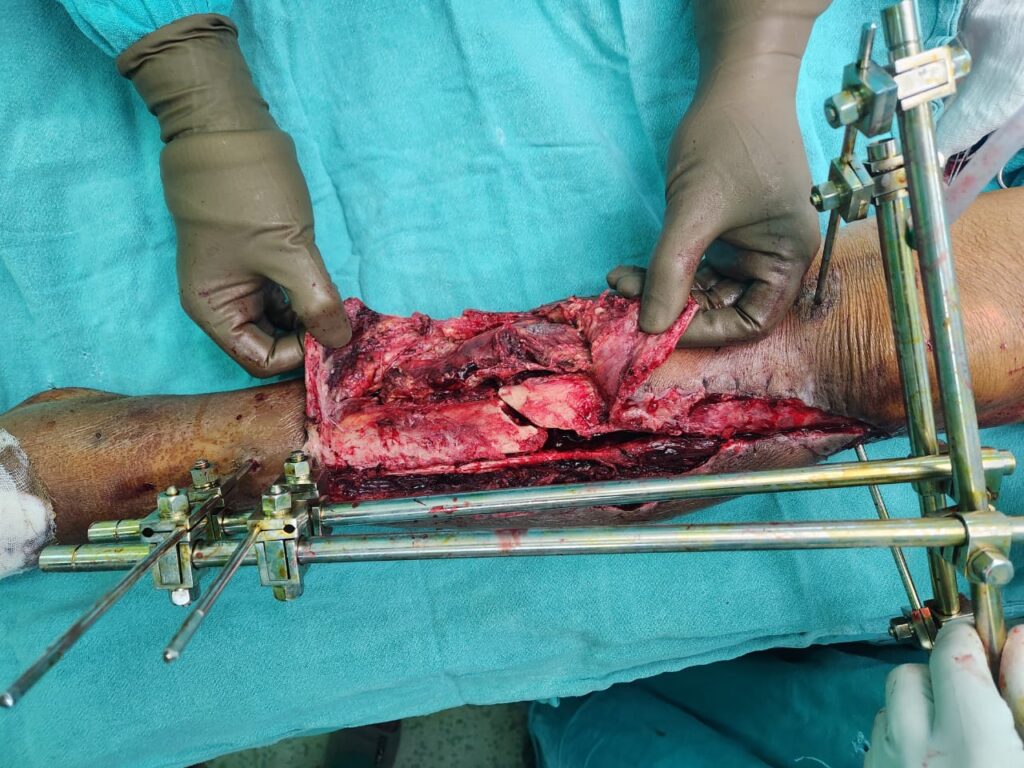
While fractures refer to break in the bones, one tends to ignore that a break in the bone is always associated with injury to the soft tissue around it. This may include muscles , ligaments and important nerves. When the force of injury is severe the overlying skin is always broken, damaged or lost making the fractured bone open which makes the fracture compound.
How is it different from other injuries?
While closed fractures can be safely treated using all the possible implants and other fixation techniques, the case with open injuries is different due to the following factors. Use of implants (plates/screws/nails) in such injuries require a robust coverage of the overlying tissues, which in most cases is not possible or is sub optimal. Secondly, as any fracture requires a good healing atmosphere, lack of proper coverage makes the fracture prone to infection and non union (fracture fails to heal in a reasonable period of time). Both these factors lead to either complete failure of the healing process or a poor long term outcomes complicated with wound discharge , discomfort, repeated breakdown and failure to put weight on the injured limb.
Why is there insufficient soft tissue for cover?
The two reasons behind it are – either direct soft tissue loss or irreversible damage requiring removal ( and hence shortage). Sometimes, there is swelling of the tissues in the region making it impossible to use them for cover. Modern orthopaedic practices which focus on early fixation and usage of implants often face this challenge therefore are compelled to ensure soft tissue coverage is optimal.
How is this cover achieved?
This broadly depends on what is available to use versus how much area and depth needs coverage. Although skin grafts are plastic surgeons’ best armamentarium they invariably fail to serve the purpose in these injuries and are therefore NOT AN OPTION. Therefore, plastic surgery utilizes the principle of flaps.
LOCAL FLAPS
This technique is still commonly utilized in small tissue defects and often require simultaneous coverage of donor sites with skin grafts. This technique heavily relies on pliability of the adjacent skin or soft tissue. Often in a traumatized leg, the local tissue is scarce and therefore not readily available for manipulation as flaps (basic plastic surgery techniques) to ensure that area of interest is covered.
Therefore, local flaps have limited capacity, often require more than one surgery and are plagued with cosmetic and wound healing complications. This is especially true in cases of high energy trauma like motor vehicle accidents. In such cases (where local flap is not feasible), the free flap (microvascular flap) technique is utilized.
FREE FLAPS
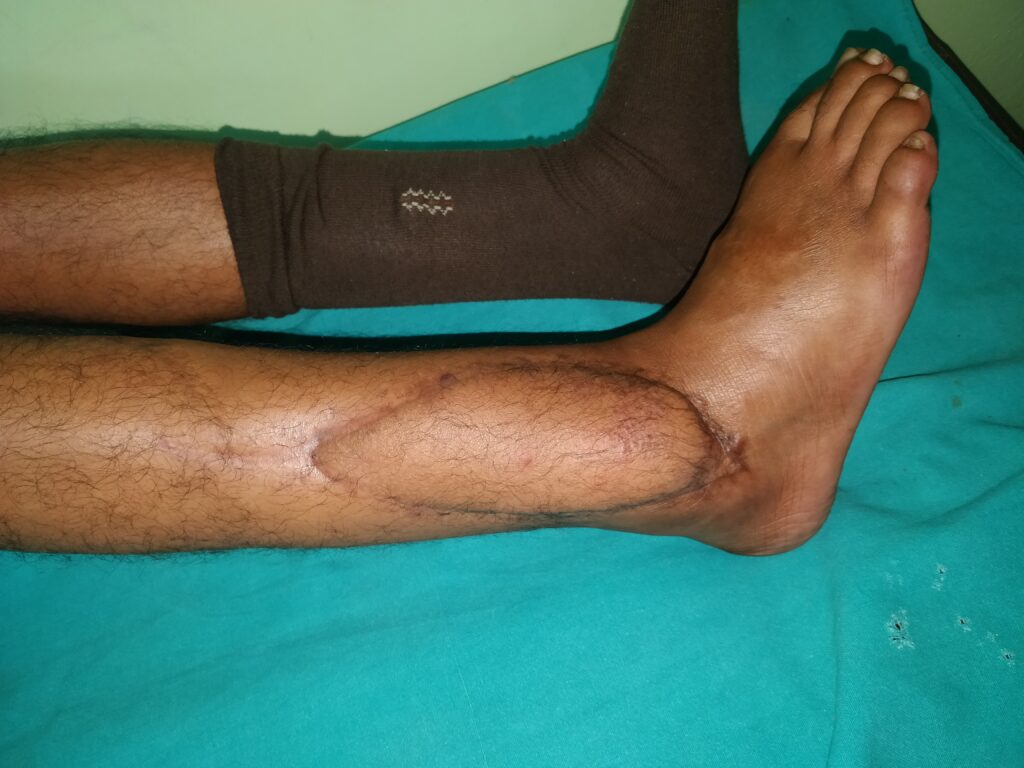
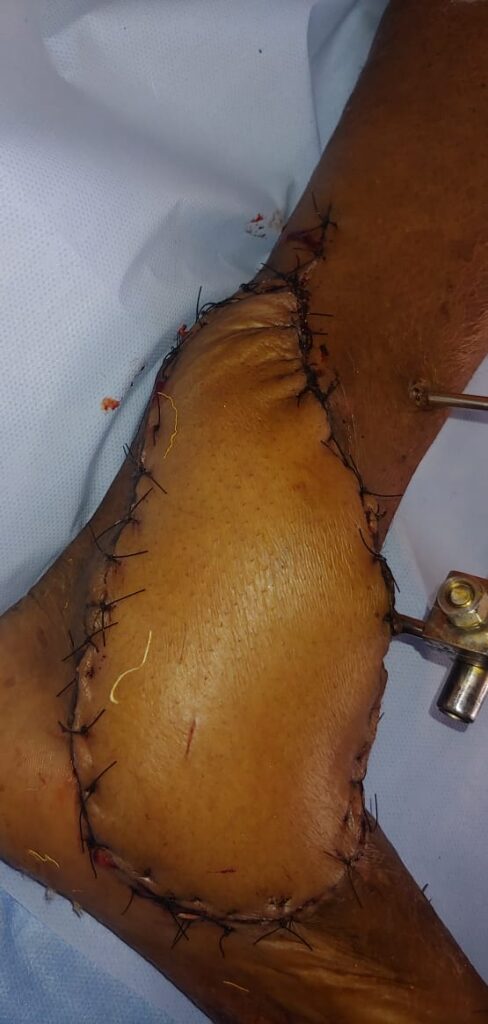
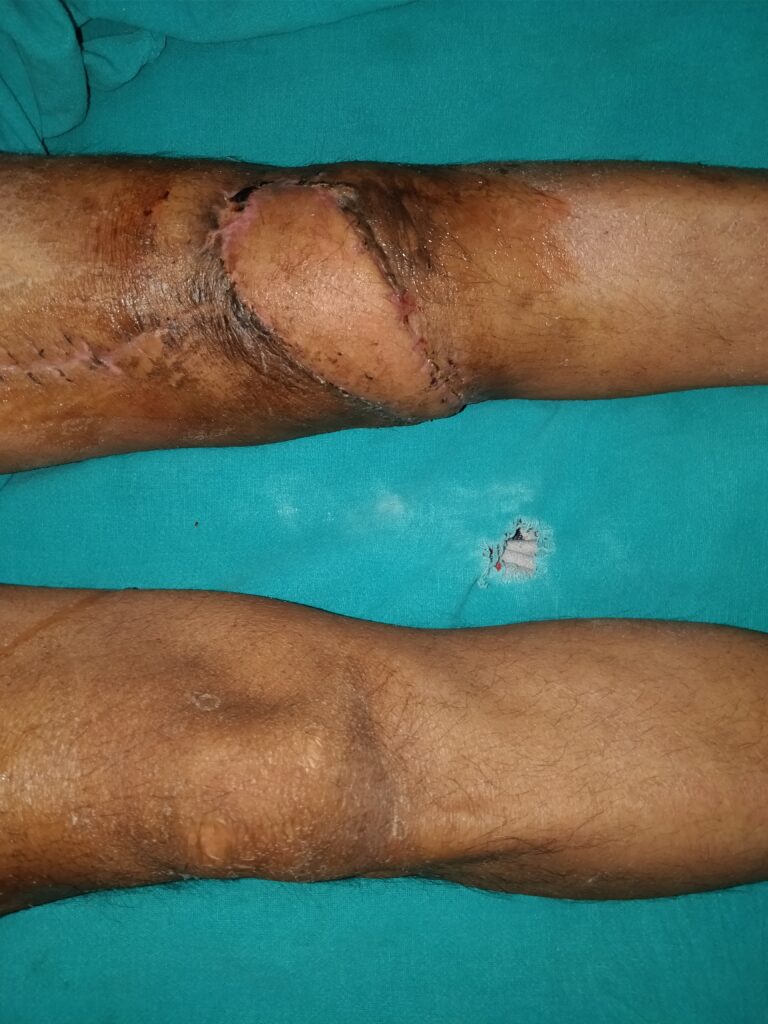
In free flaps, microvascular surgery enables the surgeon to transplant tissues from remote areas of the body to the injury site. This significantly improves the capacity to cover prevent donor site ( area of tissue harvest) related complications and deformity. This also is a single shot procedure which gives a significant time advantage to the patient as they can be rapidly progressed to aggressive orthopaedic fixation.
What is the downside of this technique ?
This is a far more intricate surgery requiring more logistics and are best done under optimal settings. The procedure could last from 4-8 hrs and patient fitness from anaesthetic standpoint is essential. Although this increases the upfront cost, it is in most occasions the only and best option, especially when unrecognized cost benefits of avoiding multiple surgery and speedy recovery are matched to job loss and multiple admissions in modern day healthcare economics.
Do flaps give a better cosmetic result ?
Although the aim of trauma reconstruction is wound healing , undue cosmetic deformity is best avoided. In same breathe, it is important to keep healing (stable soft tissue coverage) as the objective and not get overtly submissive to cosmetic fallouts. Flaps are commonly more bulky than surrounding skin even if they have the same texture. This can be thinned using minimally invasive or open techniques at a later date. Free flaps in particular allow greater liberties to maintain cosmesis or improve them at a later stage if desired. With considerable advancements in microvascular surgery, free flaps are getting increasingly thinner and more customized to restore the pre injury look.
/